
Auschwitz-Birkenau FAQ: Everything You Need to Know

This page answers the most commonly asked questions about visiting Auschwitz-Birkenau — from booking tickets and getting there to what to wear, what to see, and how long the visit takes. Use the sections below to find what you need, or browse the full guide using the navigation links on this site.
Everything you need to plan a visit to Auschwitz-Birkenau, in one place. Each answer links to a full dedicated article where you can read more.
Tickets & Booking
Is entry to Auschwitz-Birkenau free?
Yes — admission to the grounds is free for all visitors. However, all visitors must pre-book a personalised entry pass at visit.auschwitz.org. If you choose a guided tour, the guide fee is approximately 75 PLN per person. No walk-in entry is available. See our Entry Passes Explained guide for full details.
Where do I book Auschwitz tickets?
The only official booking platform is visit.auschwitz.org. Be cautious of third-party websites claiming to sell Auschwitz tickets — the museum does not cooperate with external ticket sellers. For a full walkthrough, see our How to Book Tickets: Step-by-Step Guide.
How far in advance should I book?
For summer visits (June–August): as early as possible, ideally 60–90 days in advance. Spring and autumn: 2–4 weeks. Winter: a few days to one week. Groups of 10+: at least 2 months. For a detailed breakdown, see How Far in Advance Should You Book?
What if the dates I want are fully booked?
Try adjacent dates, check at 12:00 noon Polish time when new passes are released, or book an organised day tour — reputable operators often have pre-secured slots. Our guide to Day Tours from Kraków lists options with pre-secured availability.
Do I need a guided tour or can I visit on my own?
Individual visitors can visit self-guided using a free entry pass (at specific times). Groups of 10 or more must have a licensed museum educator-guide. For first-time visitors, a guided tour is strongly recommended — see Guided Tour vs Self-Guided Visit for a full comparison.
Are there concessions?
The guide fee is reduced for students up to 26 years, people over 75, and disabled visitors. Entry to the grounds is free for everyone. Full details are in our Prices, Concessions & Free Entry guide.
Getting There
How do I get from Kraków to Auschwitz?
Four main options: the Lajkonik bus (90 min direct to museum gate, ~20 PLN), PKP train to Oświęcim (90 min + local connection), car via A4 motorway (~80 min), or an organised guided day tour with hotel pickup. See our full guide to Getting to Auschwitz from Kraków for timetables and directions.
Can I visit Auschwitz from Warsaw in one day?
Yes, but it is a long day — approximately 13–15 hours in total. The guided day tour from Warsaw by fast train via Kraków is the most practical option, as explained in our guide to Getting to Auschwitz from Warsaw.
Is there a direct bus from Kraków to Auschwitz?
Yes — the Lajkonik bus runs from Kraków’s MDA bus station directly to the Oświęcim Muzeum stop outside the museum gate. Journey time approximately 90 minutes, cost approximately 20 PLN each way. For timetables and stops, see our guide to Getting to Auschwitz by Public Bus.
Is there parking at Auschwitz?
Yes. A paid car park is at the main entrance (20 PLN for a car per day). A free overflow car park is 700 metres away when the main lot is full. Full route and parking details are in our guide to Driving to Auschwitz: Routes & Parking.
Which airport is closest to Auschwitz?
Both Kraków Airport (KRK) and Katowice Airport (KTW) are approximately 55 km away. Katowice has a slightly shorter drive (45–60 min). Kraków has more international connections. For onward transfer options from each airport, see Getting to Auschwitz from the Airports.
On The Day
What are the opening hours?
The site opens at 7:30am year-round. Last entry varies from 2:00pm (December–January) to 7:00pm (July–August). Closed on 1 January, 25 December, and Easter Sunday. See the full seasonal schedule in our Opening Hours of Auschwitz-Birkenau guide.
How long does a visit take?
A standard 3.5-hour guided tour covers both Auschwitz I and Birkenau. Including travel from Kraków, allow a full day of approximately 7–8 hours. For a detailed breakdown, see How Long Does a Visit Take?
What should I wear?
Modest, comfortable clothing appropriate for a place of mourning. Comfortable, broken-in walking shoes are essential — the tour involves 5–7 km of walking. Dress for the weather; much of the Birkenau visit is outdoors with little shelter. A complete checklist is in our What to Wear and Bring guide.
What size bag can I bring?
Maximum 35×25×15 cm inside the museum. Larger bags must be stored in your vehicle or the on-site luggage storage room. For a full overview of what is available on the day, see On-Site Facilities.
Can I take photos?
Personal photography is permitted throughout most of the site without flash or tripod. Photography is prohibited in the hair room in Block 4 and the basement of Block 11. Full rules are covered in our Photography Rules at Auschwitz-Birkenau guide.
Is there food available on site?
A café is near the Auschwitz I entrance and a smaller café near the Birkenau gate. Food and drinks are not permitted on the museum grounds — only in the café areas. For more on what is available on the day, see On-Site Facilities.
How do I get between Auschwitz I and Birkenau?
A free museum shuttle bus runs between the two sites for visitors on guided tours. The journey takes approximately 10 minutes. More information is available in our guide to The Shuttle Bus Between Sites.
What to See
What is the difference between Auschwitz I and Birkenau?
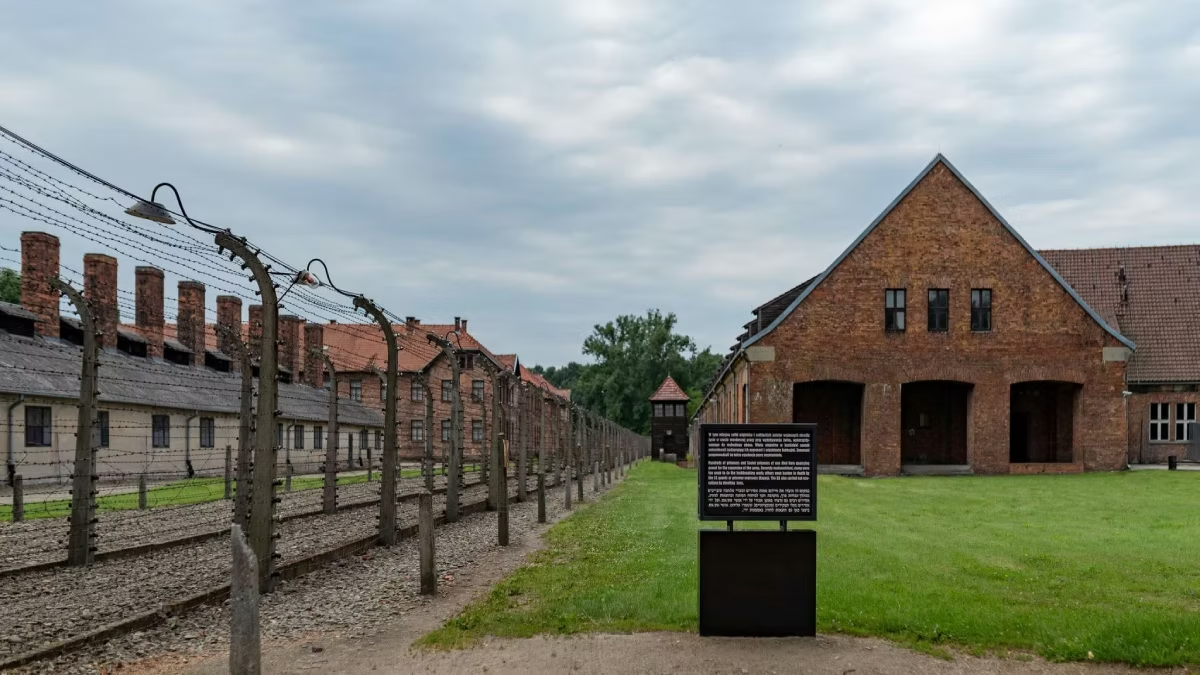
Auschwitz I is the original main camp — a compact institutional site of brick exhibition blocks, including the “Arbeit Macht Frei” gate, Block 11, and Crematorium I; see our Auschwitz I: Complete Visitor Guide for full details. Birkenau is the much larger extermination camp — an open 175-hectare site with the railway ramp, prisoner barracks (and their chimney stacks), and the ruins of the gas chambers; our Auschwitz II-Birkenau: Complete Visitor Guide covers it in depth.
Is the Arbeit Macht Frei gate original?
No. The original was stolen in 2009, recovered cut into three pieces, and is now in secure museum storage. What visitors see is a precise replica. The full story is told in our guide to The “Arbeit Macht Frei” Gate.
Can you go inside the gas chamber?
Yes — Crematorium I at Auschwitz I is open and you can walk through the interior including the gas chamber. The Birkenau crematoria were dynamited by the SS and exist only as ruins. Our guide to The Gas Chamber & Crematorium I explains what you will see inside.
What is in the exhibition blocks at Auschwitz I?
Block 4: evidence of mass extermination including the hair room (photography prohibited). Block 5: victims’ belongings — shoes, suitcases, glasses, children’s clothing. Block 6: prisoner registration photographs and accounts of daily life. A full block-by-block breakdown is in our guide to The Prisoner Exhibitions.
What are the chimneys at Birkenau?
Each brick chimney stack marks the location of a former prisoner barrack. The barracks themselves were burned or demolished; the chimneys survived. Walking among the rows of chimneys makes the scale of Birkenau physically real, as described in our guide to The Prisoner Barracks at Birkenau.
What is the International Monument?
The International Monument to the Victims stands between the ruins of the Birkenau crematoria at the end of the railway ramp. Unveiled in 1967, it bears inscriptions in 19 languages. It is where most guided tours conclude; read more in our guide to The International Monument to the Victims.
What is Kanada?
Kanada was the warehouse complex at Birkenau where property confiscated from murdered victims was sorted and stored. Two original warehouse barracks survive and are accessible on the study tour (not the standard 3.5-hour tour). Learn more in our guide to The Kanada Warehouses.
Special Circumstances
Can I visit Auschwitz with children?
The museum recommends against visits for children under 14 due to the graphic nature of the exhibitions. A supervised childcare facility is on site for families with younger children. Our guide on Visiting Auschwitz with Children covers what to expect and how to prepare.
Is Auschwitz accessible for wheelchair users?
Free wheelchairs are available at the Visitor Service Centre. The shuttle bus is wheelchair accessible. Access is limited in parts of both sites due to the need to preserve historical authenticity. Contact the museum in advance; full details are in our guide to Accessibility at Auschwitz-Birkenau.
What languages are tours available in?
Over 20 languages, including English, Polish, German, French, Spanish, Italian, Hebrew, Russian, Dutch, Czech, Hungarian, and others. English is the most widely available. A full list is in our guide to Languages Available for Guided Tours.
Can I visit Auschwitz online?
Yes. A live online guided tour of approximately 2 hours is available in English, French, German, Hebrew, Italian, Polish, and Spanish, bookable at visit.auschwitz.org. Full details are covered in our guide to Online Virtual Tours of Auschwitz.
What should I do after visiting Auschwitz?
Give yourself time. Do not rush straight to the next activity. The experience takes time to absorb. See our After Your Visit: Resources & Reflection guide for recommended reading and resources.
