
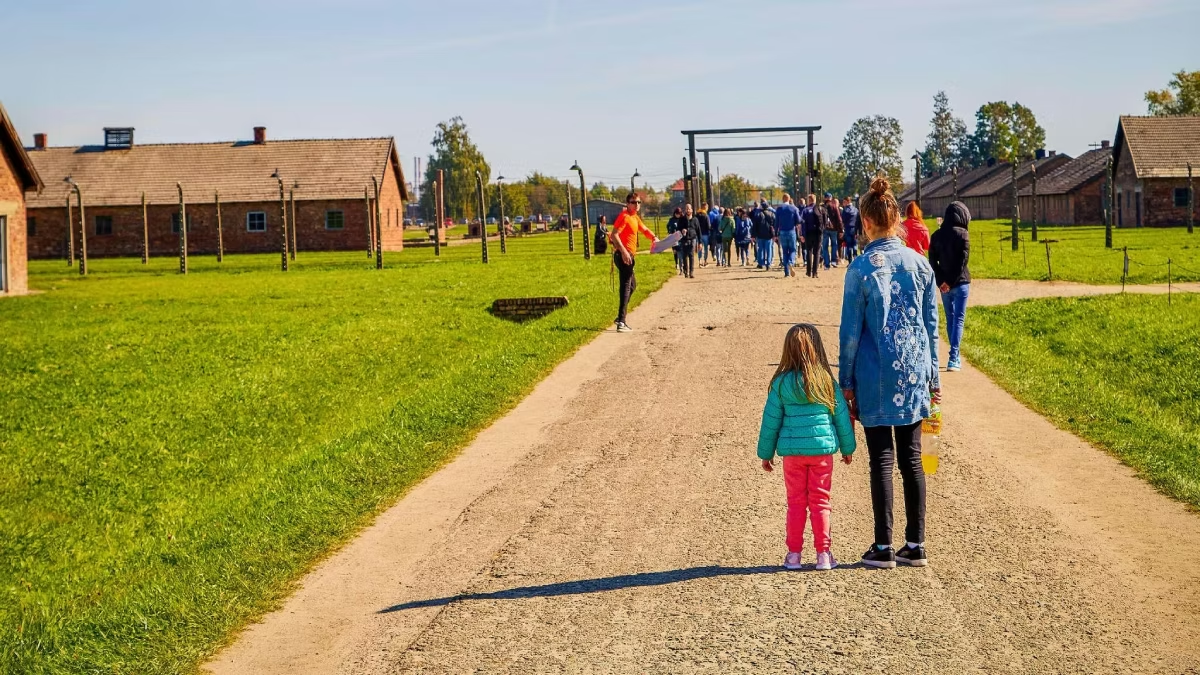
Visiting Auschwitz-Birkenau with Children

The Auschwitz-Birkenau Memorial does not recommend visits for children under 14, due to the graphic and emotionally intense nature of the exhibitions. This is guidance, not a legal prohibition — the decision rests with parents and guardians. For families with children younger than 14, a supervised childcare facility is available on site. For children 14 and older, a visit can be profoundly educational when handled with appropriate preparation and sensitivity.
The question of whether to bring children to Auschwitz-Birkenau is one that many families wrestle with seriously, and rightly so. This guide does not make that decision for you. It gives you the honest information — about what children will encounter, what the museum recommends, and how to approach the visit if you decide to go — so that you can make the right choice for your family.
The Museum’s Age Recommendation
The Auschwitz-Birkenau Memorial officially states that visits are not recommended for children under the age of 14. This recommendation exists because of the nature of the site and its exhibitions, which include:
- Graphic photographic evidence of mass murder, starvation, and medical experimentation
- Displays of victims’ personal belongings, including clothing, shoes, and suitcases with names
- A room containing nearly two tonnes of human hair taken from victims before their murder
- The physical spaces of gas chambers, execution walls, and prison cells
- Emotionally overwhelming content that requires a degree of psychological maturity to process
This is not a bureaucratic age restriction but a considered institutional position based on the nature of the content. The museum’s role is to preserve and transmit the historical reality of what happened there — which means not softening or filtering the evidence for younger audiences.
The Decision Is Yours
The museum’s recommendation is clear, but it is guidance rather than a legal requirement. Children under 14 are not turned away at the gate. Parents and guardians who decide to bring younger children are responsible for that decision and for supporting their children through the experience.
Some families — particularly those with a personal or familial connection to the Holocaust, or those engaged in Holocaust education with older primary-school children — choose to visit with children under 14. This is a deeply personal choice that only the family can make, based on their knowledge of their child’s maturity, emotional resilience, and readiness.
If you are considering bringing a child under 14, the sections below on preparation and on what children will encounter are the most important parts of this guide.
What Children Will Encounter on Site
Understanding what the visit involves is essential for making an informed decision. This is not a sanitised or child-adapted experience — the museum presents the historical reality of Auschwitz as it was.
At Auschwitz I, children will encounter:
- Exhibition halls with large-scale photographs of deportations, selections, and the conditions of the camp
- Vitrines containing the belongings of victims — suitcases, shoes, glasses, children’s clothing
- A room containing approximately two tonnes of human hair taken from victims; photography is prohibited here
- Block 11, the camp prison, including the standing cells and the courtyard where thousands were executed
- The original gas chamber, where the first Zyklon B killings took place; photography is prohibited inside
At Auschwitz II-Birkenau, children will encounter:
- The scale of the extermination site — nearly 175 hectares of barracks, watchtowers, and ruins
- The railway ramp where arriving prisoners were selected, including almost all children under 15, who were sent directly to the gas chambers
- The ruins of four gas chambers and crematoria
- The prisoner barracks, including those used to house and process women and children
The information provided by guides about what happened to children at Auschwitz is an integral part of the tour. Guides do not omit or soften this content.
The On-Site Childcare Facility
For families with children under 14 who decide not to bring them into the museum, a supervised childcare facility is available near the museum entrance. This allows parents or guardians to leave young children in care while completing the visit.
Details of the childcare facility — including operating hours and reservation requirements — should be confirmed directly with the museum at auschwitz.org before your visit, as arrangements may vary.
Visiting with Teenagers (14–17)
For teenagers aged 14 and above, a visit to Auschwitz-Birkenau can be one of the most significant educational experiences of their lives — provided they are prepared in advance and supported during and after the visit. Many school groups from across Europe and beyond visit with students in this age group. The key is preparation: arriving with some knowledge of the history, and having space to process the experience afterwards.
The museum offers dedicated group tours for school parties, including one-day and two-day study tour formats specifically designed for student groups. These tours are led by museum educator-guides who are trained to present the history sensitively and appropriately for young people. Read more in our guide to group visits and school tours.
For families visiting with teenagers independently rather than as part of a school group, the standard 3.5-hour guided tour is the right format. Read our guide to how long a visit takes to understand the full day’s structure.
How to Prepare Children and Teenagers
Preparation makes a significant difference to how children and teenagers experience a visit to Auschwitz-Birkenau. Arriving with some prior knowledge of the Holocaust and of the specific history of the camp means the visit deepens rather than overwhelms.
Suggested preparation by age:
Ages 14–15:
- A general introduction to World War II and the Holocaust — a short documentary or age-appropriate non-fiction is more useful than a novel
- An honest conversation about what they will see and why it is important to visit
- Reassurance that strong emotional reactions — sadness, numbness, anger — are entirely normal
Ages 16–18:
- A first-person survivor account such as Primo Levi’s If This Is a Man or Elie Wiesel’s Night
- Background on the history of the camp specifically — the museum’s own educational resources at auschwitz.org are excellent
- A discussion about the purpose and meaning of the visit before arriving
One important note: avoid preparing teenagers with fictional accounts that misrepresent the historical reality of Auschwitz. The Boy in the Striped Pyjamas and The Tattooist of Auschwitz both contain significant historical inaccuracies and can create false expectations of what the visit will involve.
After the Visit
The visit to Auschwitz-Birkenau does not end when you leave the site. For children and teenagers especially, the period after the visit — whether the same afternoon or the days that follow — is when much of the processing happens. Give them time and space for this.
Some useful things to have ready after a visit with young people:
- Time to talk, without rushing to the next activity
- Access to further reading or resources if they want to learn more
- Recognition that silence and numbness are as valid as tears
- Our guide to after your visit includes recommended resources for continued engagement with the history
Practical Tips for Families
- Arrive early. The security check and entry process take time, and children can find waiting frustrating. Arriving 30 minutes before your entry slot is the minimum; arriving earlier is better.
- Dress appropriately. Ensure children are dressed modestly and with comfortable walking shoes — the tour involves 5–7 km of walking. See our full what to wear and bring guide.
- Bring water. There is no free drinking water on site. Children will need more hydration than adults over a long, emotionally and physically demanding visit.
- Manage expectations honestly. Tell children in advance that they will see things that are disturbing, and that this is the point — this is evidence of what happened, and it matters that they see it.
- Use a guided tour. A licensed museum educator-guide frames the history with the context and sensitivity that allows teenagers to engage with the visit rather than simply be confronted by it. See our comparison of guided vs self-guided visits.
Frequently Asked Questions
Can children visit Auschwitz?
Children under 14 are not recommended to visit, per the museum’s official guidance, because of the graphic and emotionally intense nature of the exhibitions. This is guidance, not a legal restriction. Children under 14 are not turned away but the decision to bring them rests with parents and guardians. A supervised on-site childcare facility is available for families who wish to leave younger children while visiting.
What age is appropriate for Auschwitz?
The museum’s official recommendation is 14 and above. Most educators and child psychologists who have considered the question agree that this is a reasonable threshold — 14-year-olds generally have the psychological maturity and historical knowledge to engage with the visit meaningfully. Some children of 12 or 13 with particular maturity and prior knowledge may be ready; others of 15 or 16 may not be. Parents know their children best.
Is there childcare at Auschwitz?
Yes. A supervised childcare facility is available near the museum entrance for families with children who are not visiting the museum. Details and reservation requirements should be confirmed directly with the museum in advance of your visit.
Do school groups visit Auschwitz?
Yes. The museum runs dedicated educational tours for school groups, with licensed educator-guides trained to present the history appropriately for student audiences. School visits are a major part of the museum’s educational mission. Read our guide to group visits and school tours for full details.
How do I prepare my teenager for a visit to Auschwitz?
The most important steps are: ensure they have some prior knowledge of the Holocaust before arriving, have an honest conversation about what they will see and why the visit matters, and give them space to process the experience afterwards. Age-appropriate non-fiction or first-person survivor accounts are the best preparation. Avoid fictional dramatisations that distort the historical reality of the camp.
