
What to Wear and Bring to Auschwitz-Birkenau

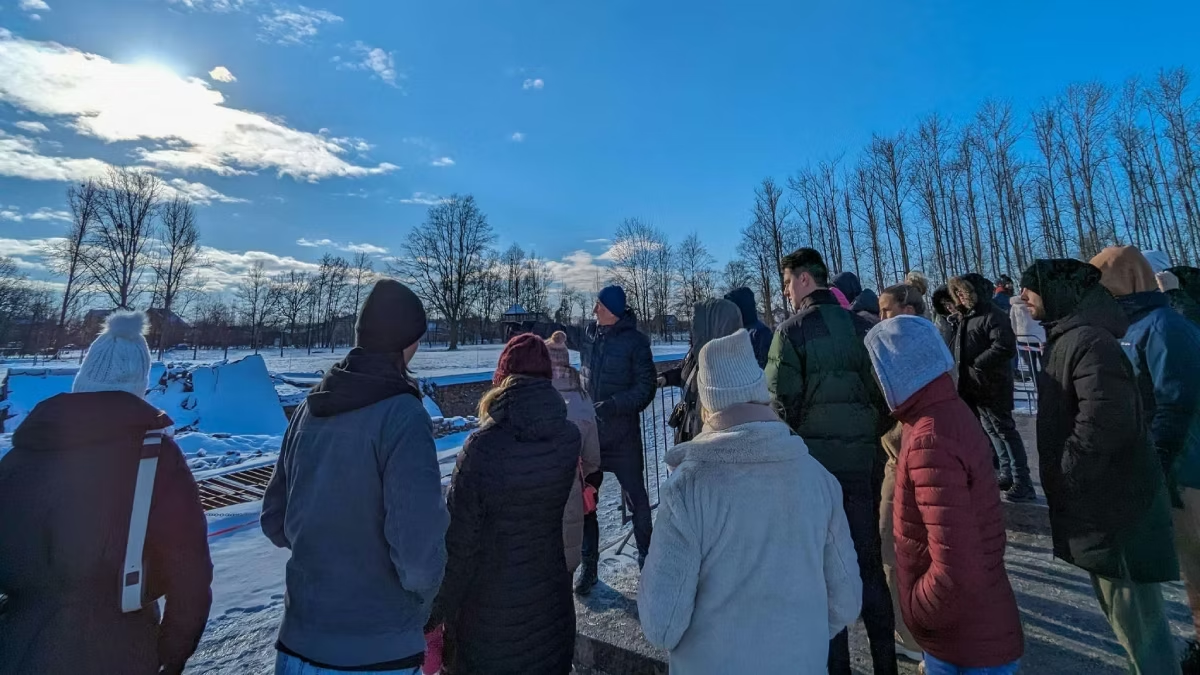
Wear comfortable, broken-in walking shoes and dress modestly and appropriately for the weather — much of the tour, particularly at Birkenau, takes place outdoors with little shelter. Bags must not exceed 35×25×15 cm inside the museum. Bring water, a valid photo ID, and your entry pass. Leave large rucksacks, food, and anything you would not consider appropriate for a place of mourning.
The practical details of what to bring to Auschwitz-Birkenau matter more than they might at a typical museum visit, for a specific reason: the tour involves 5–7 km of walking across two open-air sites, in conditions that can be cold, wet, hot, or icy depending on the season. What you wear and carry will directly affect your comfort — and your ability to be fully present for what is one of the most significant visits a person can make.
This guide covers the dress code, bag restrictions, and seasonal packing guidance in full.
The Dress Code at Auschwitz-Birkenau
Auschwitz-Birkenau is a site of mourning and remembrance. The museum requires that visitors dress in a manner that reflects the nature of the place. This is not a strict formal code — there is no list of prohibited colours or specific garments — but the principle is clear: dress as you would for a solemn occasion.
In practical terms, this means:
- Avoid very brightly coloured, festive, or provocative clothing
- Avoid clothing with offensive slogans, graphics, or imagery
- Avoid very revealing or beach-style clothing
- Dress as you would for a funeral or a formal place of remembrance
Most visitors intuitively understand this. The museum’s staff may ask visitors who are dressed in a manner considered disrespectful to cover up or, in serious cases, to leave the site.
Footwear: The Single Most Important Item
A standard 3.5-hour guided tour of both sites involves approximately 5–7 km of walking. Auschwitz I has paved paths between and through its brick buildings. Birkenau is largely unpaved — gravel paths, grass, and open ground — and can be muddy after rain or icy in winter. Comfortable, well broken-in walking shoes or boots are essential. Do not wear new shoes, heeled shoes, or sandals.
At Birkenau in particular, the sheer scale of the site — nearly 175 hectares of open ground — means that walking distances are significant and the terrain is uneven. A visitor in unsuitable footwear will find the Birkenau portion of the tour physically uncomfortable, which detracts from what should be an experience of full presence and attention.
Recommended footwear by season:
- Spring/Autumn: Comfortable trainers or walking shoes with good grip
- Summer: Lightweight walking shoes; avoid open sandals
- Winter: Waterproof ankle boots or walking boots with warm lining; the gravel paths at Birkenau can become icy and muddy
Bag Size Rules
Bags, rucksacks, and handbags brought inside the museum must not exceed 35×25×15 cm in size. Anything larger must be left in your vehicle or in the on-site luggage storage facility near the main entrance (a fee applies). There are no lockers inside the museum grounds.
This is a firm rule, enforced at the security checkpoint. If you are arriving by car, leave large bags in the vehicle. If you are arriving by bus or train, use the left-luggage facility before entering. Organised day tours from Kraków typically accommodate luggage storage on the coach, which is one of the practical advantages of this option.
A small daypack or crossbody bag within the size limit is perfectly fine and is what most visitors carry.
Essential Items to Bring
Valid photo ID — non-negotiable
All entry passes are personalised. Your name on the pass must exactly match your name on your identity document. You will be asked to present your ID at the security checkpoint. Without it, you will not be admitted — this happens to a small number of visitors every day. Acceptable documents include a passport, national identity card, or driver’s licence with photo.
Your entry pass
Your entry pass can be shown on your phone or printed. If showing digitally, ensure your phone is charged — there is no guarantee of mobile charging on site.
Water
There is no free drinking water available on site. The café near the entrance and at Birkenau sells bottled water, but bringing your own is more convenient and less expensive. In summer especially, hydration is important given the amount of walking in often-sunny conditions.
Layers
Even in summer, a light layer is useful for the indoor exhibition spaces, which can be cooler than outside. In spring and autumn, the temperature can drop unexpectedly during an outdoor tour.
Snacks (for before or after, not during)
Food and drinks are not permitted inside the museum buildings or on the camp grounds. Eating is restricted to the café areas near the entrances. If you are on a full-day organised tour, check whether a lunch stop or lunch box is included.
What to Bring by Season
Summer (June–August)
The outdoor sections of the tour — particularly at Birkenau — have very limited shade. Summer visits require more thought about sun exposure than most visitors anticipate.
- Lightweight, breathable clothing in modest colours
- Comfortable walking shoes (avoid sandals on unpaved Birkenau paths)
- Sun hat or cap
- Sunscreen
- At least 1 litre of water per person
- Sunglasses
Spring and Autumn (April–May, September–October)
The most forgiving seasons for packing. Temperatures are mild but variable, and rain is possible at any time.
- Light jacket or mid-layer
- Waterproof outer layer (packable is ideal)
- Comfortable walking shoes or light boots
- Small umbrella or rain cover for your bag
Winter (November–March)
Winter visits are among the most moving times to come, but the cold at Birkenau — which is entirely exposed, with no shelter from wind — can be extreme. Temperatures regularly fall below −10°C in January and February. Dressing inadequately for a winter visit is a common mistake that significantly affects the experience.
- Thermal base layer (top and bottom)
- Warm mid-layer (fleece or wool)
- Heavy waterproof outer coat
- Warm hat, gloves, and scarf
- Thick thermal socks
- Waterproof, insulated ankle boots or walking boots
- Hand warmers (recommended for January–February visits)
What Not to Bring
- Large bags or rucksacks — anything over 35×25×15 cm will not be admitted
- Food and drinks — not permitted in the museum buildings or on the grounds
- Selfie sticks and tripods — not permitted anywhere on site
- Drones — strictly prohibited; use requires advance museum approval
- Inappropriate clothing — bright, festive, or revealing clothing is not permitted
Photography Equipment
Personal photography is permitted throughout most of the site without flash or tripod. A standard smartphone is the most practical and unobtrusive camera for this visit. If you are using a dedicated camera, keep it compact — a large camera bag will likely exceed the bag size limit and will need to be stored.
Two specific areas prohibit photography entirely: the room containing victims’ hair in Block 4, and the basement of Block 11. Signs at the entrance to these spaces make this clear. Read our full photography rules guide for more detail.
Accessibility Considerations
If you are visiting with a mobility impairment, the museum provides wheelchairs free of charge at the Visitor Service Centre near the main entrance. Contact the museum in advance to arrange an adjusted route — some buildings have limited access due to stairs and the requirement to preserve the historical authenticity of the site. The free shuttle bus between Auschwitz I and Birkenau is equipped with a platform for wheelchair users.
Read our full guide to accessibility at Auschwitz-Birkenau for complete information.
Frequently Asked Questions
Can I bring a large backpack to Auschwitz?
No. Bags larger than 35×25×15 cm are not permitted inside the museum. They must be left in your vehicle or stored in the on-site luggage facility near the entrance (a fee applies). Plan your packing accordingly — a small daypack or shoulder bag within the size limit is the most practical option.
What shoes should I wear to Auschwitz?
Comfortable, well broken-in walking shoes or boots are essential. The tour involves 5–7 km of walking, including significant outdoor sections on unpaved paths at Birkenau. Avoid heeled shoes, new shoes, or open sandals. In winter, waterproof insulated boots are strongly recommended.
Do I need to dress formally for Auschwitz?
Not formally, but modestly and respectfully. The dress code is not prescriptive but reflects the site’s nature as a place of mourning. Avoid very bright, festive, revealing, or provocative clothing. Most visitors who approach the visit with the right spirit of seriousness will instinctively dress appropriately.
Can I bring food and drink into Auschwitz?
Food and drink are not permitted inside the museum buildings or on the camp grounds. You may eat and drink in the café areas near the site entrances. Bring a water bottle — especially in summer — as there is no free drinking water on site.
Do I need to bring my passport to Auschwitz?
You need a valid photo ID whose name exactly matches the name on your personalised entry pass. A passport, national identity card, or photo driver’s licence are all acceptable. Failure to present a matching ID at the security checkpoint can result in refusal of entry.
Can I bring an umbrella to Auschwitz?
Yes. A compact folding umbrella is a practical item for any visit in spring, autumn, or winter. It falls within the bag size limit when folded and is particularly useful at Birkenau, where there is no shelter from rain.
