
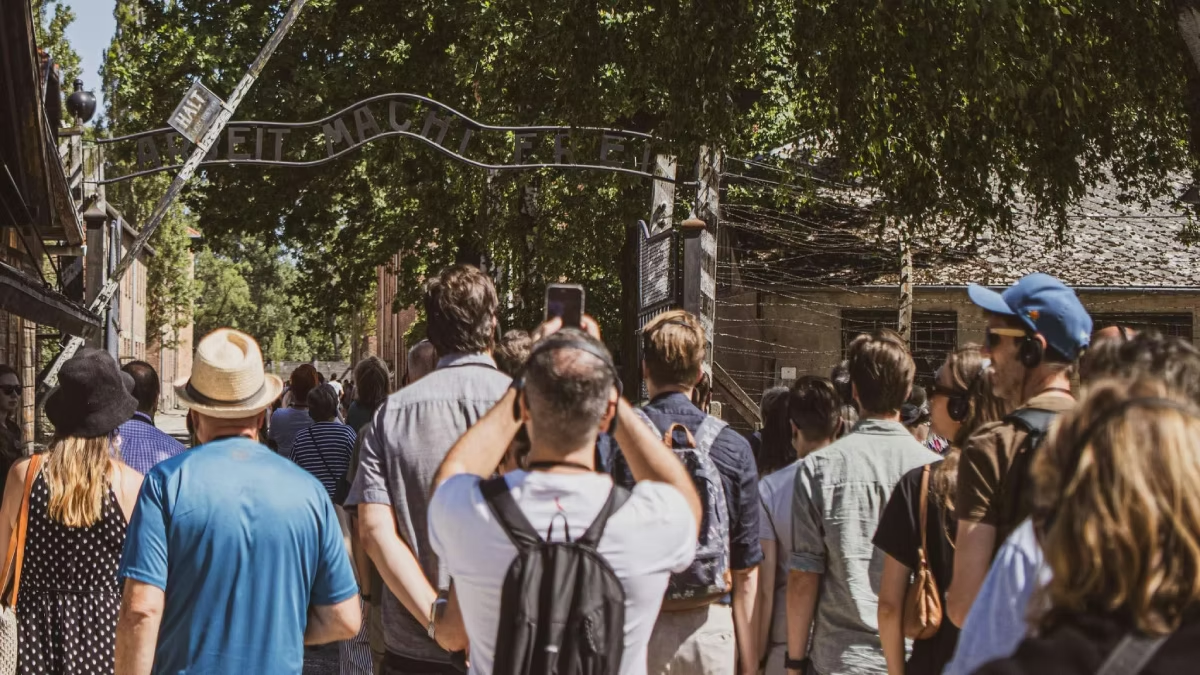
Photography Rules at Auschwitz-Birkenau

Personal photography is permitted throughout most of Auschwitz-Birkenau without flash and without a tripod. Photography is completely prohibited in two specific locations: the room displaying victims’ hair in Block 4 at Auschwitz I, and the basement of Block 11. Signs clearly mark both spaces. Commercial photography, drone photography, and filming for broadcast all require prior written approval from the museum.
Photography at Auschwitz-Birkenau is one of the questions visitors ask most frequently before a visit — and the one where getting it wrong, even unintentionally, can feel like a serious failure of respect. This guide sets out every rule clearly, explains the reasoning behind the restrictions, and addresses the ethical questions that many thoughtful visitors find themselves asking.
What Is Permitted
Photography for personal, non-commercial purposes is permitted throughout the grounds of both Auschwitz I and Auschwitz II-Birkenau, subject to the following conditions:
- No flash — inside any building or exhibition space
- No tripods or monopods — anywhere on site
- No selfie sticks — anywhere on site
- No drones — anywhere on the museum grounds without prior written approval
- Personal use only — images taken on site must not be used for commercial purposes without the museum’s written consent
Within these conditions, visitors may photograph the grounds, buildings, ruins, and outdoor spaces freely. This includes the “Arbeit Macht Frei” gate, the railway ramp at Birkenau, the ruins of the gas chambers and crematoria, the watchtowers, the barracks, and the International Monument to the Victims.
Where Photography Is Prohibited
Two specific areas within the museum are entirely off-limits to photography:
Block 4 — The Room Containing Victims’ Hair
Block 4 at Auschwitz I houses the permanent exhibition on evidence of the crime. One room contains approximately two tonnes of human hair, shorn from victims before their murder. Photography in this room is prohibited entirely.
The prohibition is an act of dignity. The hair on display belonged to specific people — people who were murdered — and photographing it for personal use, even without commercial intent, is considered a violation of their memory. The museum is consistent and firm on this point. Signs at the entrance to the room make the restriction clear, and museum staff are present to enforce it.
Block 11 — The Basement
Block 11 is the camp prison, known as the Death Block. Its basement contains the standing cells — spaces approximately 90 cm by 90 cm in which four prisoners were forced to stand through the night as punishment — and the starvation cells where prisoners were left to die without food or water. Photography is prohibited throughout the basement of Block 11.
The reasoning is the same as for Block 4: these are spaces where extreme suffering and death occurred, and the museum’s position is that they deserve to be experienced rather than photographed.
Both prohibited areas are clearly signed. If you are on a guided tour, your educator-guide will remind you at the entrance to each space.
The Ethics of Photography at a Memorial Site
The formal rules cover what is and is not permitted. But many visitors to Auschwitz-Birkenau find themselves asking a more personal question: even where photography is allowed, what is the right thing to do?
There is no single answer, and the museum does not prescribe one beyond the formal rules. Some considerations that many visitors find helpful:
Presence over documentation. A photograph of the gas chamber ruins at Birkenau will not capture what it feels like to stand there. Many visitors who visit with the intention of photographing extensively find themselves lowering their cameras because the experience of the space itself demands full attention. This is worth being open to.
Who is in the frame. Photographs of other visitors — particularly images that could appear disrespectful, whether or not they are intended that way — are worth considering carefully. A photograph of a person standing casually in front of the Auschwitz gate may be innocuous; the same image shared on social media without context may be received very differently.
The victims’ belongings. The exhibition cases containing shoes, suitcases, glasses, and children’s clothing are among the most affecting displays in any museum in the world. Photography here is permitted. Many visitors choose to photograph these displays; others feel it is not right. This is a personal judgement call, and the museum leaves it to individual conscience — with the exception of the hair room, where it makes the decision for you.
Context matters when sharing. Images from Auschwitz-Birkenau that appear on social media without context — a smiling selfie in front of the gate, a casual shot of the barracks — can cause genuine offence, not because the individual intended disrespect, but because the image separated from its context looks disrespectful. Think about how an image will read to someone who was not there.
Equipment and Practical Guidance
Smartphones: The most practical and unobtrusive camera for this visit. A standard smartphone camera handles both the indoor exhibition spaces (low light, no flash) and the outdoor sites well. Most visitors use their phone.
Dedicated cameras: Permitted, but keep the camera compact. A large camera bag will likely exceed the 35×25×15 cm bag limit and will need to be left in your vehicle or luggage storage. A mirrorless camera or small DSLR in a compact bag is manageable.
Video: Personal video recording is permitted on the same basis as photography — personal use, no tripod, no flash, and subject to the same location restrictions. Recording for YouTube, social media channels with commercial intent, or broadcast purposes requires prior museum approval.
Commercial Photography and Filming
Commercial photography, filming for television, documentary, social media with commercial intent, or any other non-personal use of images taken at the site requires prior written approval from the museum. This applies to professional photographers, journalists, filmmakers, and content creators. Applications should be directed to the museum’s communications department via auschwitz.org.
Images of Auschwitz-Birkenau used in publications or media must not tarnish the memory of the victims. Any manipulation of images — including cropping, graphic processing, or AI manipulation — requires explicit museum approval.
Frequently Asked Questions
Can you take photos at Auschwitz-Birkenau?
Yes, personal photography is permitted throughout most of the site without flash and without a tripod. Two areas prohibit photography entirely: the room displaying victims’ hair in Block 4, and the basement of Block 11. Selfie sticks, tripods, and drones are not permitted anywhere on site.
Can you take photos inside Auschwitz?
Yes, inside most of the exhibition buildings, personal photography without flash is permitted. The exceptions are the hair room in Block 4 and the basement of Block 11, both clearly signed. Photography is also permitted inside the gas chamber at Auschwitz I — though many visitors choose not to photograph this space.
Is flash photography allowed at Auschwitz?
No. Flash photography is prohibited inside all buildings at Auschwitz-Birkenau. Most modern smartphone and camera flash systems can be disabled in settings. If you are uncertain how to disable your flash before the visit, do so before entering the museum.
Can I use a tripod at Auschwitz?
No. Tripods and monopods are not permitted anywhere on the museum grounds. If you need a stable shot, brace against a wall or use a compact mini-tripod that fits within the bag size limit — though note that the standard tripod prohibition applies regardless of size.
Can I take photos of the gas chambers at Auschwitz?
Photography of the ruins of the gas chambers and crematoria at Birkenau — which are outdoor sites — is permitted. Photography inside the gas chamber at Auschwitz I (Crematorium I) is permitted, though many visitors choose not to take photographs there. Photography inside the basement of Block 11 is prohibited.
Can I fly a drone over Auschwitz?
No. Drone photography and filming over the museum grounds is strictly prohibited without prior written approval from the museum. Unauthorised drone use over the memorial is a serious violation and may result in legal consequences under Polish law.
Are selfies appropriate at Auschwitz?
Selfie sticks are not permitted. As for the selfie itself — this is a personal ethical question that the museum does not formally adjudicate beyond the equipment restriction. Many visitors take photographs of themselves at Auschwitz as a record of a meaningful visit. Others feel it is not appropriate. The considerations in the ethics section above may help you decide what feels right for you.
