
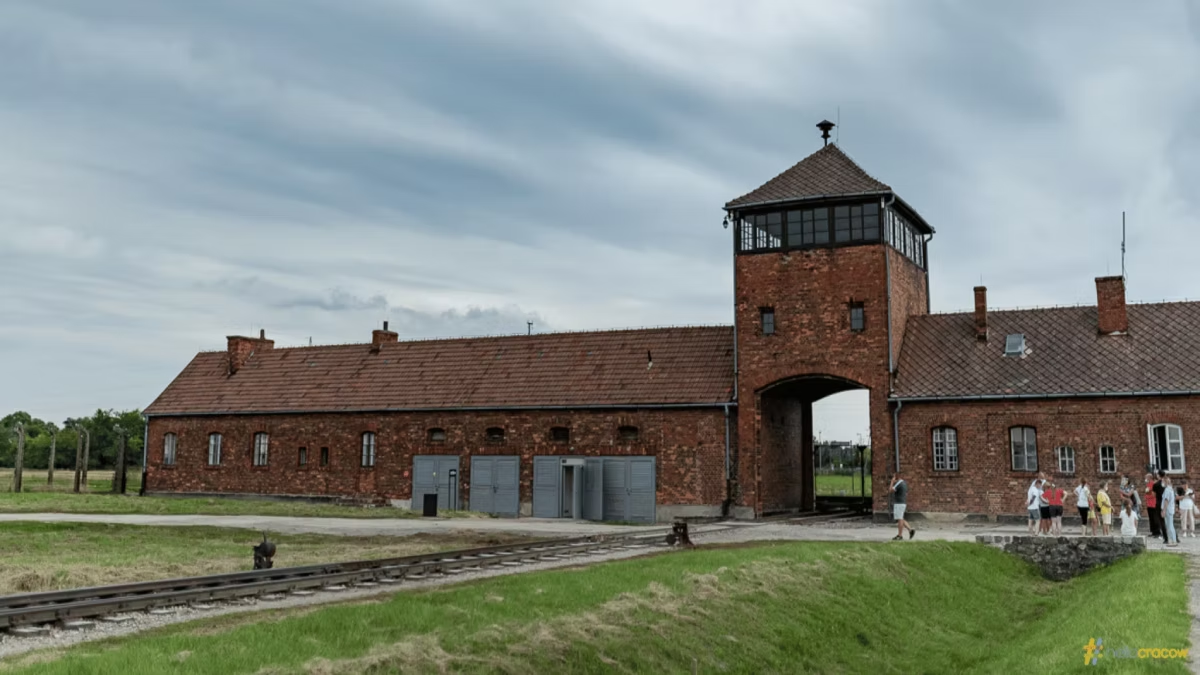
The Kanada Warehouses at Birkenau

“Kanada” was the name given by prisoners to the warehouse complex at Birkenau where property confiscated from arriving deportees was sorted, catalogued, and stored before being shipped back to Germany. The name reflected the prisoners’ association of Canada with wealth and abundance. At liberation, Soviet forces found 348 warehouses containing the belongings of victims — clothing, food, household goods, and valuables. Two original warehouse barracks survive and are accessible on the study tour. The belongings on display in Block 5 at Auschwitz I came from Kanada.
The name “Kanada” was chosen by prisoners, not by the SS. It reflected a dark irony: in a world of extreme deprivation, the warehouse complex was a place of relative material wealth — mountains of clothing, food, medicines, and valuables that those who worked there might occasionally access, at enormous personal risk. Canada represented, to mid-twentieth century Europeans, a land of plenty. The prisoners named the warehouses accordingly.
What Kanada Was
When deportees arrived at Birkenau and were subjected to the selection process on the railway ramp, those selected for immediate death were directed to the gas chambers — but they were told first to leave their luggage on the ramp, carefully labelled, for collection after their “shower.” Their belongings were then transported to the Kanada warehouses.
The scale of what accumulated in Kanada reflected the scale of the murder operation. At its peak, the complex contained 35 barracks — later expanded — storing:
- Clothing, including coats, dresses, suits, children’s clothing, and shoes by the tens of thousands
- Food brought by deportees who believed they were being resettled — bread, preserved foods, sugar, coffee
- Medicines and medical supplies
- Household goods — cooking equipment, bedding, tools
- Valuables — jewellery, currency, gold, religious objects
- Prosthetic limbs, glasses, and personal documents
All of this property was the systematically stolen legacy of the people who were murdered. It was sorted by prisoner labour details — including members of the Sonderkommando and other working parties — catalogued, and shipped back to Germany, where it was distributed to German civilians and institutions or converted into war materials.
The Prisoners Who Worked in Kanada
Working in Kanada was, within the context of Auschwitz-Birkenau, a position of extreme privilege — and extreme moral complexity. Prisoners assigned to the sorting details had access to food, warm clothing, and occasionally valuables that could be traded for survival advantages within the camp. The mortality rate among Kanada workers was significantly lower than among the general prisoner population.
This came at a profound cost. Working in Kanada meant daily, direct engagement with the evidence of mass murder — sorting the clothes of people killed hours earlier, finding children’s toys, letters, family photographs among the belongings of those who had been told they were being resettled. Survivor testimonies from Kanada workers are among the most psychologically complex accounts from any group within the camp.
The property workers occasionally smuggled out of Kanada — food, medicine, clothing — often supported prisoner resistance networks and helped sustain lives elsewhere in the camp.
What Was Found at Liberation
When Soviet forces liberated Auschwitz-Birkenau on 27 January 1945, they found the Kanada complex partially destroyed — the SS had burned most of the warehouses in January 1945 as part of their evidence-destruction operation. But two warehouse barracks remained, and in them:
- Approximately 836,000 sets of women’s clothing and underwear
- Approximately 348,000 sets of men’s suits and clothing
- Approximately 38,000 pairs of men’s shoes and 13,000 carpets
- 7,000 kg of human hair ready for shipment, in addition to the hair found elsewhere on the site
These figures, documented by the Soviet investigators, became part of the evidentiary record at the Nuremberg trials. The hair found in the warehouses, along with the hair discovered in Block 4 at Auschwitz I, constitutes one of the most direct pieces of physical evidence of the scale of the murder operation.
Visiting Kanada
The Kanada warehouse complex is located in the northwest section of the Birkenau camp, away from the main visitor route along the railway ramp. It is not included in the standard 3.5-hour guided tour — it is accessible on the 6-hour one-day study tour and the two-day study tour formats.
Two original warehouse barracks survive from the Kanada complex and are open to visitors on the study tour. The interior of the surviving barracks is empty — the property that filled them was removed or destroyed — but the scale of the buildings, and the knowledge of what they contained, is significant.
The belongings displayed in Block 5 at Auschwitz I — the shoes, suitcases, glasses, prosthetic limbs, and children’s clothing — came from the Kanada warehouses. Visiting Block 5 and then Kanada, on a two-day study tour, traces the property of victims from its display back to the facility where it was stored.
If you wish to visit Kanada, book the study tour format through visit.auschwitz.org. See our tour types guide for full details of the study tour formats.
Frequently Asked Questions
What was Kanada at Auschwitz-Birkenau?
Kanada was the name given by prisoners to the warehouse complex at Birkenau where property confiscated from arriving deportees — clothing, food, valuables, household goods — was sorted and stored before being shipped back to Germany. The name reflected prisoners’ association of Canada with wealth and abundance, in ironic contrast to their own conditions of starvation.
Why was it called Kanada?
The name was given by prisoners, not the SS. For mid-twentieth century European prisoners, Canada represented a land of wealth and opportunity — a stark contrast to the extreme deprivation of the camp. The warehouses, filled with the belongings of murdered victims, were the closest thing to abundance within the camp perimeter.
What was found in the Kanada warehouses at liberation?
Soviet investigators found approximately 836,000 sets of women’s clothing, 348,000 men’s suits, 38,000 pairs of men’s shoes, 13,000 carpets, and 7,000 kg of human hair ready for industrial shipment, among many other items. Most of the warehouses had been burned by the SS before liberation, but two survived.
Can I visit Kanada on a standard tour?
No. The Kanada complex is not included in the standard 3.5-hour guided tour. It is accessible on the 6-hour one-day study tour and two-day study tour formats, bookable through visit.auschwitz.org. See our tour types guide for details.
Where did the shoes and suitcases in Block 5 come from?
The belongings displayed in Block 5 at Auschwitz I — including over 80,000 shoes, 3,800 suitcases, glasses, and children’s clothing — came from the Kanada warehouses at Birkenau, where they had been sorted and stored after being confiscated from arriving deportees.
