
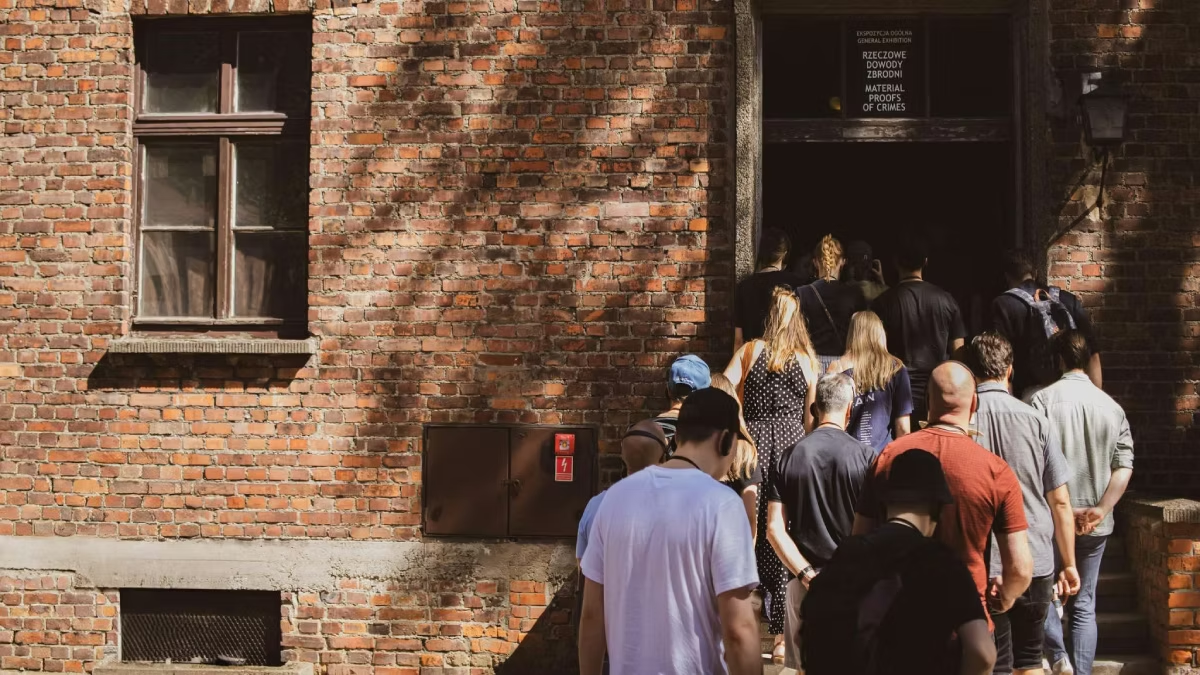
Rules of Conduct & Visitor Etiquette at Auschwitz-Birkenau

Auschwitz-Birkenau is a memorial site and a cemetery. Visitors are required to dress modestly, behave with solemnity and respect throughout, speak quietly, refrain from eating and drinking on the grounds, and follow all photography restrictions. These are not suggestions — they are binding conditions of entry. Failure to comply may result in being asked to leave the site.
The rules of conduct at Auschwitz-Birkenau exist because of what the site is. This is not a museum in the conventional sense — it is the preserved grounds of a mass murder facility, where the remains of victims are still present in the earth. The expectations placed on visitors reflect that reality, and understanding them before you arrive is part of approaching the visit with the right spirit.
This guide covers every rule and expectation, clearly and completely.
Why These Rules Exist
Every rule at Auschwitz-Birkenau stems from a single principle: respect for the victims and for the site as their memorial. When you walk across the grounds of Birkenau, you are walking over ground that contains the ashes and remains of those who were murdered there. When you enter Block 11 at Auschwitz I, you are standing in the same cells where prisoners were tortured and starved. The physical proximity to what happened here is unlike any other museum experience.
The museum staff are trained to enforce the code of conduct firmly but respectfully. The vast majority of visitors arrive with the right understanding. Reading this guide in advance means you will too.
Dress Code
Visitors are required to dress in a manner that reflects the nature of the site. The museum describes this as dressing “befitting the place” — meaning clothing appropriate for a solemn occasion.
Not permitted:
- Very brightly coloured or festive clothing (e.g. carnival colours, neon, heavily decorated party wear)
- Revealing or beach-style clothing (e.g. crop tops, hotpants, swimwear)
- Clothing carrying offensive slogans, imagery, or symbols
- Clothing that would be considered disrespectful in a place of mourning
Practical guidance:
The dress code is not a formal uniform requirement. Jeans, dark trousers, plain t-shirts, and casual but modest clothing are entirely appropriate. The key test is whether you would wear the outfit to a funeral or a formal commemoration — if yes, it is appropriate for Auschwitz.
Museum staff may ask visitors to cover up if their clothing is considered inappropriate. In serious cases, entry may be refused.
Detailed guidance on what to wear, including seasonal packing advice, is in our full what to wear and bring guide.
Behaviour and Conduct on Site
Visitors must behave with appropriate solemnity throughout the visit. This means speaking quietly, moving respectfully through the spaces, and conducting yourself with full awareness that you are on ground where over a million people were murdered. Loud conversation, laughter, and disruptive behaviour are not permitted.
Specific behavioural expectations include:
Speak quietly. Loud conversations — particularly in the exhibition blocks and in the gas chambers — are not appropriate. If you are on a guided tour, listen carefully to your educator-guide rather than talking over them.
Do not climb on or touch structures. The buildings, ruins, fences, and artefacts at Auschwitz-Birkenau are historically significant and often fragile. Do not climb on walls, ruins, or fencing. Do not touch artefacts behind glass or barriers.
Do not remove anything from the site. Taking gravel, soil, fragments of building material, or anything else from the grounds of the memorial is prohibited and deeply disrespectful. This rule is enforced.
Do not lean on structures. A specific and visible form of disrespect that the museum calls out — leaning casually against the walls of the buildings, the gas chamber ruins, or the barracks.
Switch your phone to silent. Phone calls should not be made on the museum grounds. Photography and navigation apps are acceptable — calls are not. If you need to take a call, step entirely outside the museum perimeter.
Move respectfully through the spaces. Rushing, pushing past other visitors, or treating the tour as a race to cover ground quickly is not appropriate. If you need more time in a particular space, tell your guide.
Eating, Drinking, and Smoking
Eating and drinking are not permitted inside the museum buildings or on the camp grounds. Food and drinks must be consumed only in the café areas near the site entrances — at Auschwitz I near the main entrance, and at Birkenau near the Birkenau gate.
Bringing food into the museum buildings is not allowed. Water bottles may be carried but not drunk while walking through the exhibitions or outdoor grounds — use the designated café and rest areas.
Smoking is prohibited throughout the museum grounds. There is no designated smoking area within the memorial site.
Photography Rules
Photography for personal purposes is permitted throughout most of both sites, without flash and without a tripod. Two specific areas prohibit photography entirely:
- The room displaying the hair of victims in Block 4 at Auschwitz I
- The basement cells of Block 11 at Auschwitz I
Signs at the entrances to both spaces make these restrictions clear. The prohibition on photographing victims’ hair is an act of dignity — the hair on display belonged to people, and photographing it for personal use is considered a violation of their memory.
Photography for commercial purposes, drone photography, and filming for broadcast or distribution all require prior written approval from the museum. Full details are in our photography rules guide.
Bag and Item Restrictions
Bags brought inside the museum must not exceed 35×25×15 cm. Larger bags must be stored in your vehicle or in the on-site luggage storage facility near the entrance (fee applies). There are no lockers inside the museum grounds.
Items not permitted inside the site:
- Large rucksacks or bags (exceeding 35×25×15 cm)
- Food and drinks (inside the buildings and grounds)
- Selfie sticks
- Tripods or monopods
- Drones
Always bring:
- Valid photo ID (name must match your entry pass exactly)
- Your entry pass (on your phone or printed)
- Water (to consume in designated areas only)
Children Under 14
The museum recommends that children under 14 do not visit, due to the graphic and emotionally intense nature of the exhibitions. This is guidance rather than a legal restriction — children under 14 are not turned away, but the decision rests with parents and guardians. A supervised childcare facility is available near the entrance for families with younger children. Full guidance is in our visiting with children guide.
Entry Pass and ID Requirements
All visitors must have a pre-booked personalised entry pass. The name on the pass must exactly match the name on the identity document presented at the security checkpoint. Discrepancies — including different name orderings, missing middle names, or abbreviations — can result in refusal of entry.
Acceptable identity documents include a passport, national identity card, or photo driver’s licence. Entry is refused to anyone unable to present a matching ID.
Arrive at least 30 minutes before your entry slot to allow time for the security process.
Frequently Asked Questions
What are the rules at Auschwitz-Birkenau?
Visitors must dress modestly and appropriately for a place of mourning, behave with solemnity and respect throughout, speak quietly, refrain from eating and drinking on the grounds, not touch or remove anything from the site, and follow all photography restrictions. Bags over 35×25×15 cm must be left outside. A valid photo ID matching your entry pass must be presented at the security checkpoint.
Can you eat at Auschwitz?
Not on the museum grounds or inside the buildings. Food and drinks may be consumed only in the café areas near the entrances to Auschwitz I and Birkenau. Bring a water bottle for the visit but consume it only in designated areas, not while walking through the site.
Can you smoke at Auschwitz?
No. Smoking is prohibited throughout the museum grounds. There is no designated smoking area within the memorial.
What happens if you break the rules at Auschwitz?
Museum staff are present throughout the site and will ask visitors who are behaving inappropriately to correct their behaviour. In serious cases — persistent disrespect, climbing on structures, attempting to remove items from the site — visitors may be required to leave. Incidents involving criminal behaviour (such as deliberately damaging the site) are reported to Polish authorities.
Can I take a selfie at Auschwitz?
Selfies are not explicitly prohibited, but selfie sticks are not allowed on site. The museum asks visitors to consider whether the moment and location are appropriate for a selfie before taking one. Photography at the Auschwitz gate, along the railway ramp, and at the International Monument is common. Photography in the gas chambers and in the rooms containing victims’ belongings requires more considered judgement about what is appropriate.
Do I need to wear anything specific to visit Auschwitz?
No specific clothing is required, but visitors must dress modestly and appropriately for a site of mourning. Comfortable walking shoes are essential — the tour involves 5–7 km of walking. Very bright, festive, revealing, or offensive clothing is not permitted. Read our complete what to wear and bring guide for detailed seasonal advice.
