
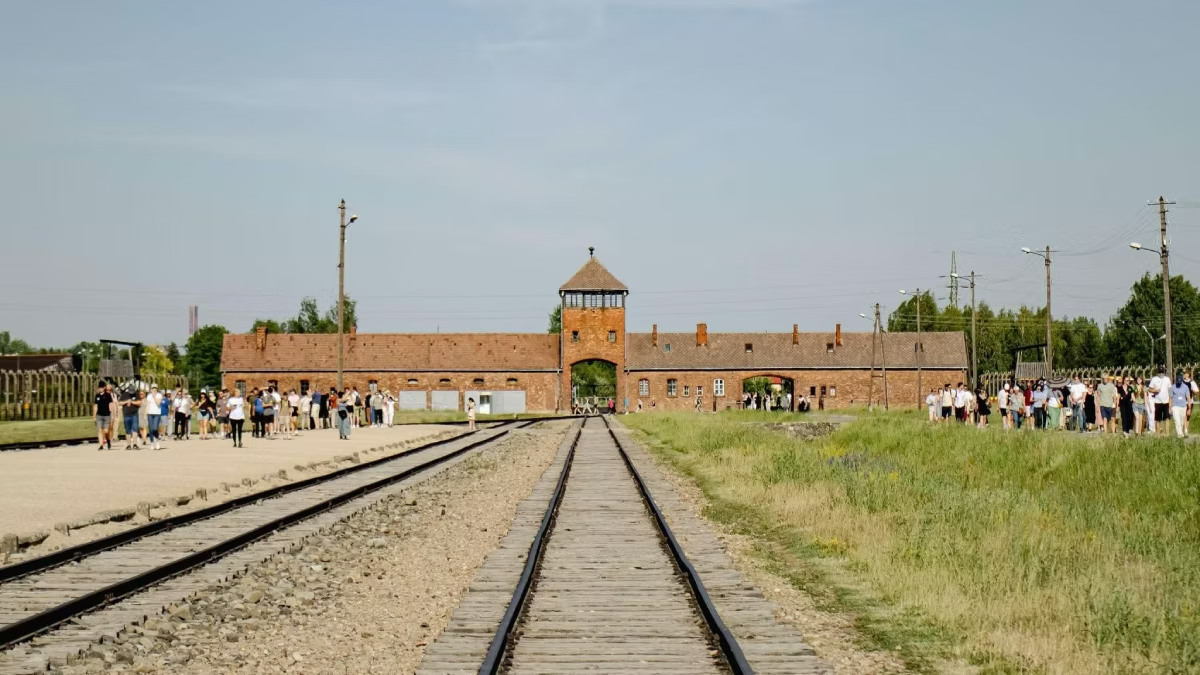
Accessibility at Auschwitz-Birkenau

Auschwitz-Birkenau provides free wheelchairs at the Visitor Service Centre and operates a wheelchair-accessible shuttle bus between the two sites. However, access is genuinely limited in parts of both Auschwitz I and Birkenau due to the need to preserve the historical authenticity of the buildings and grounds. Visitors with mobility needs are strongly advised to contact the museum in advance to arrange an adjusted route.
Planning an accessible visit to a site of this nature requires honest information. Auschwitz-Birkenau is a preserved historical site, not a purpose-built museum, and that means terrain, building access, and facilities present real challenges for visitors with disabilities or mobility impairments. This guide sets out exactly what is and is not accessible, and how to plan accordingly.
Terrain and Ground Conditions
Auschwitz I is largely navigable on paved paths between and around its brick buildings, though some interiors have stairs and uneven thresholds. Auschwitz II-Birkenau presents more significant challenges: the site is vast, predominantly unpaved, with gravel paths, grass, and open ground that can become muddy in wet weather and icy in winter. The distances involved at Birkenau are substantial — navigating the full site on foot covers several kilometres.
Visitors using wheelchairs or walking aids should be aware of the following specific conditions:
- Auschwitz I: The main pathways between blocks are paved and generally accessible. Some exhibition buildings have narrow doorways, stairs to upper floors, or uneven stone flooring inside. Not all buildings can be fully accessed by wheelchair users, though the ground-floor exhibitions in the key blocks are generally reachable.
- Auschwitz II-Birkenau: The central axis road running through the site is surfaced and passable by wheelchair. However, most of the rest of the site consists of unpaved gravel tracks and grass areas that are harder to navigate, particularly after rainfall.
If you have specific mobility needs, contacting the museum directly before your visit is essential. The museum can provide information about which specific buildings and routes are accessible and arrange an adjusted itinerary. Contact details are available at auschwitz.org.
Wheelchair Availability
Free wheelchairs are available for loan at the Visitor Service Centre located near the main entrance to Auschwitz I. These are available on a first-come, first-served basis. Given the size of the site and the number of daily visitors, it is advisable to arrive early to ensure availability, particularly during the busier spring and summer months.
Visitors who use their own wheelchair or mobility device may bring it to the site. The bag size restriction (maximum 35×25×15 cm) applies to bags and personal items, not to mobility equipment.
The Shuttle Bus Between Sites
The free museum shuttle bus connecting Auschwitz I and Auschwitz II-Birkenau is equipped with a ramp platform to allow wheelchair users to board and exit. The journey between sites takes approximately 10 minutes.
The shuttle is available to all visitors on guided tours. If you are visiting independently, note that the shuttle is provided for individual visitors on guided tours — read our guide to tour types to understand which visit formats include shuttle access. Details about the shuttle are also covered in our shuttle bus guide.
Visiting with Visual Impairments
The Auschwitz Memorial’s permanent exhibitions are primarily visual in nature — photographs, documents, maps, and physical artefacts. Audio descriptions and additional support for visitors with visual impairments are not currently part of the standard guided tour, but the museum’s educator-guides are trained to provide detailed verbal descriptions of exhibition content.
Visitors with visual impairments planning a visit are encouraged to contact the museum’s Visitor Service Centre in advance to discuss tailored arrangements.
Visiting with Hearing Impairments
Guided tours are conducted verbally by museum educator-guides. For visitors with hearing impairments, the following options are available:
- Written materials: The museum’s exhibition texts are reproduced in printed guide booklets, available in multiple languages. These provide written versions of much of the content covered in the guided tour.
- Sign language tours: The museum can arrange sign language-interpreted tours on request, subject to availability. This must be arranged in advance through the group booking system at visit.auschwitz.org.
- Hearing loops: Not universally available throughout the site. Visitors with hearing aids should not rely on loop systems being present.
Visiting with Cognitive or Sensory Needs
Auschwitz-Birkenau is a site of significant emotional and sensory intensity. The exhibitions contain graphic and disturbing content — including photographs of victims, displays of personal belongings, and the physical spaces of gas chambers and cells. For visitors with cognitive disabilities, autism spectrum conditions, or sensory sensitivities, this should be taken into account carefully when deciding whether and how to visit.
The museum does not currently offer specific sensory-adjusted tour formats. However, the self-guided visit option — where available — allows visitors to move at their own pace and spend as little or as much time in each space as suits them. Our guide to guided vs self-guided visits explains how to book the self-guided format.
For visitors who are uncertain whether the visit will be manageable, the online guided tour offers an alternative way to engage with the site’s history from a controlled environment. Read more in our guide to online virtual tours.
Parking and Getting to the Site
A car park with designated accessible parking spaces is available at the main museum entrance at 55 Więźniów Oświęcimia Street. If you are travelling by public transport, note that the Oświęcim train station is 1.5 km from the museum entrance — which may not be manageable on foot for visitors with significant mobility limitations.
An organised day tour from Kraków that includes hotel pickup and drop-off removes the transport accessibility challenge entirely, with door-to-door service in a vehicle. Confirm with the tour operator that the vehicle used can accommodate your specific needs before booking.
For visitors coming from further afield, see our guides to tours from Warsaw, Wrocław, Katowice, and Prague for transport options from each city.
Facilities on Site
- Accessible toilets: Available near the main entrance at Auschwitz I and at Birkenau. Note that toilet use on site requires payment — bring small change.
- Rest areas: Seating is available in limited areas near the entrance and café. There are no formal rest areas distributed throughout the Birkenau site itself.
- Café: The café near the Auschwitz I entrance is accessible at ground level. The café area at Birkenau is also ground-level.
Contacting the Museum in Advance
Visitors with accessibility needs are strongly encouraged to contact the museum’s Visitor Service Centre before booking, to discuss available adjustments and ensure your visit is as manageable as possible. The museum is genuinely committed to facilitating access where the nature of the preserved site allows.
Contact and detailed accessibility information is available at auschwitz.org/en/visiting/.
Frequently Asked Questions
Is Auschwitz wheelchair accessible?
Partially. Auschwitz I has paved paths and most ground-floor exhibitions are accessible by wheelchair, though some buildings have stairs or uneven thresholds that limit access. Birkenau is more challenging — the central road is surfaced but most of the site is unpaved gravel and grass. Free wheelchairs are available at the Visitor Service Centre. Contact the museum in advance to arrange an adjusted route tailored to your needs.
Are there wheelchairs available at Auschwitz?
Yes. Free wheelchairs are available for loan at the Visitor Service Centre near the main entrance to Auschwitz I, on a first-come, first-served basis. Visitors may also bring their own wheelchair or mobility device.
Is the shuttle bus between Auschwitz I and Birkenau wheelchair accessible?
Yes. The free museum shuttle bus is equipped with a ramp platform for wheelchair users. It is available for visitors on guided tours.
Can visitors with hearing impairments take a guided tour?
Yes, though advance arrangements are advisable. Sign language-interpreted tours can be arranged on request through the museum’s group booking system. Printed guide booklets reproducing exhibition text are available in multiple languages for visitors who prefer written materials.
Is Auschwitz suitable for visitors with severe mobility limitations?
It depends on the specific limitations. The site is a preserved historical landscape, not a purpose-built accessible venue, and some sections are genuinely difficult to navigate. We strongly recommend contacting the museum in advance to discuss your specific situation and what adjusted arrangements are possible. The museum is willing to work with visitors to provide the best experience the site allows.
Is there accessible parking at Auschwitz?
Yes. The main car park at 55 Więźniów Oświęcimia Street includes designated accessible parking spaces near the museum entrance.
