
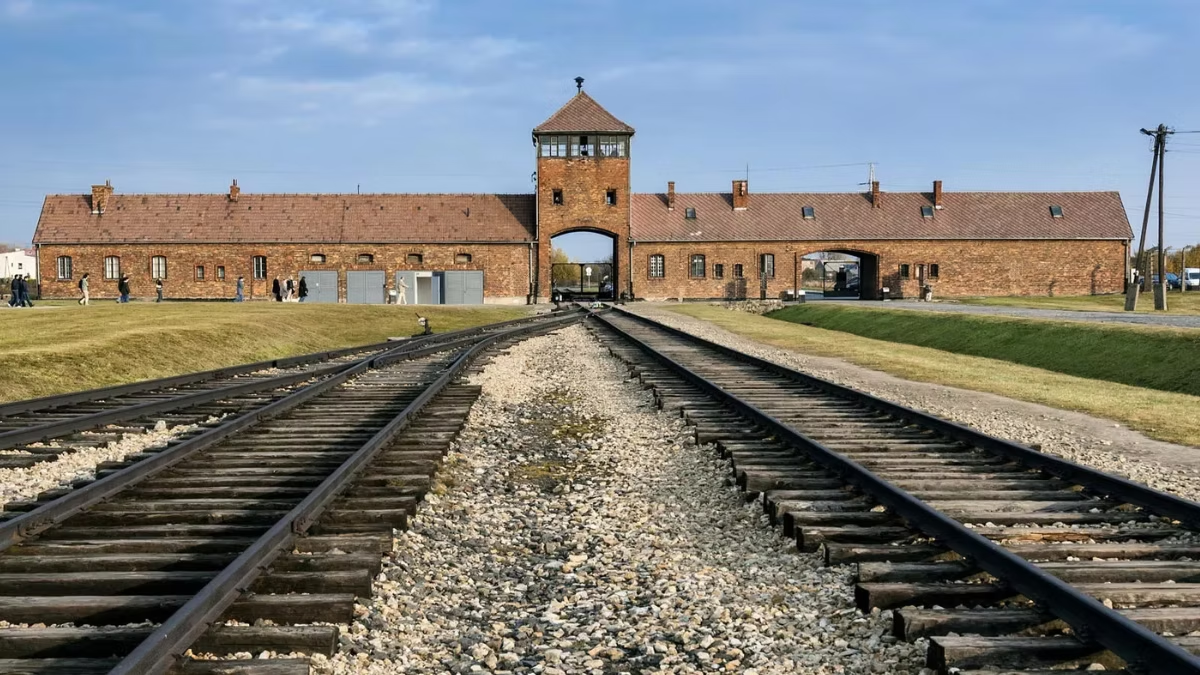
Best Time to Visit Auschwitz-Birkenau

The best time to visit Auschwitz-Birkenau is during spring (April–May) or autumn (September–October). Crowds are significantly smaller than in summer, the weather is mild enough for comfortable outdoor walking, and entry passes are far easier to obtain. Avoid July and August if possible — these are the peak months, when the site receives the heaviest visitor traffic out of over 1.8 million annual visitors.
Choosing when to visit Auschwitz-Birkenau is not simply a matter of convenience. The experience of walking these grounds — through the barracks, past the ruins of the gas chambers, across the open expanse of Birkenau — deserves time, quiet, and space for reflection. Crowd levels and season genuinely shape that experience in ways that matter.
This guide covers every factor that should inform your decision: visitor numbers by season, weather conditions, monthly opening hours, and when entry passes are easiest to secure. If you have not yet planned how to get to the site, our guides on getting to Auschwitz from Kraków and from Warsaw cover your options in full.
Why Timing Your Visit Matters
The Auschwitz-Birkenau Memorial receives over 1.8 million visitors annually, making it one of the most-visited historical sites in Europe. Those numbers are not evenly spread across the year. Summer — particularly July and August — accounts for a disproportionately large share, while winter months see a fraction of those numbers.
Beyond crowd management, timing affects two things that are unique to this site. First, because a significant portion of the visit — especially at Birkenau — takes place entirely outdoors, weather and temperature have a direct impact on the physical experience. Second, because daily entry pass numbers are strictly capped, timing determines whether you can get a pass at all during peak season.
Best Time to Visit by Season
Spring — April to May
April and May offer the ideal balance of manageable visitor numbers and comfortable weather. Temperatures range from 10°C to 18°C, the grounds are accessible, and entry passes are considerably easier to secure than in summer. Weekdays in April are particularly quiet. Note that the site is closed on Easter Sunday each year.
Spring is widely considered the best season for a first-time visit. The site is not overcrowded, the weather supports comfortable outdoor walking — essential at Birkenau, where much of the tour is conducted outside — and the conditions allow the necessary time and mental space for the visit to be what it should be.
One important note: the March of the Living, an annual international Holocaust commemoration march, takes place in April. On the day of the march the Memorial is closed to general visitors, and access is limited on the days either side. Check the museum’s official calendar at auschwitz.org before confirming your booking.
Summer — June to August
Summer is the busiest and most challenging time to visit. July and August see peak visitor numbers, heavily reduced entry pass availability, and a noticeably more crowded atmosphere throughout. If summer is your only option, book as early as possible — up to 90 days in advance — and expect a more pressured experience, particularly at Auschwitz I.
Despite the crowds, summer does offer practical advantages. The museum’s opening hours extend into the evening — last entry in July is at 7pm — giving you more flexibility with timing. Temperatures of 20°C–27°C are generally comfortable for walking, though the lack of shade at Birkenau can be tiring on very hot days.
If you are visiting in summer, booking an organised guided day tour from Kraków is worth serious consideration. These tours have pre-secured entry slots and skip-the-line access, removing the uncertainty of individual pass availability.
Autumn — September to October
September and October are an excellent alternative to spring. Visitor numbers drop noticeably after the end of European school holidays in late August, temperatures remain mild (10°C–18°C), and entry passes are readily available. The grounds in autumn carry a particular solemnity that many visitors describe as deeply affecting.
October in particular offers some of the quietest conditions of the calendar year. Weather can be variable — October can bring rain — so a waterproof outer layer is worth packing, especially for the Birkenau section of the tour. Our guide to what to wear and bring covers seasonal packing in detail.
Winter — November to March
Winter is the quietest period at Auschwitz-Birkenau, with the lowest visitor numbers and the easiest entry pass availability. Temperatures regularly drop well below 0°C, and snow covers the grounds from December through February. Visiting in winter is an intensely moving experience — the cold connects viscerally with what prisoners endured in thin striped uniforms — but visitors must dress very warmly and should note the shorter opening hours.
The museum is open throughout winter with the exception of 1 January, 25 December, and Easter Sunday. Winter opening hours are shorter — last entry in December and January is at 2pm — meaning less time on site. Plan accordingly, particularly if you want to see both Auschwitz I and Birkenau properly.
27 January marks the anniversary of the liberation of Auschwitz. The museum holds a major commemorative ceremony on this date each year, attended by survivors, heads of state, and international delegations. Access arrangements on this day differ from the norm — check the museum’s official notices in advance.
Best Time of Day to Visit
Regardless of season, arriving as early as possible within your booked entry slot is consistently the best strategy. The first morning entry times see fewer visitors than afternoon slots, and the site feels qualitatively different in the early hours — more open, quieter, more space for the visit to be personal.
From a practical standpoint, arriving early also gives you the energy advantage. A standard guided tour covers approximately 5–7 km of walking across both sites. Starting fresh in the morning means you will engage with Birkenau — which comes second in the tour sequence — at full capacity rather than exhausted.
Avoid arriving at the last minute for your entry slot. Security checks are thorough, and the museum asks all visitors to arrive at least 30 minutes before their scheduled time.
Weather by Month
Because a large portion of the visit takes place outdoors — particularly at Birkenau, which covers nearly 175 hectares of open, largely unsheltered ground — weather has a meaningful impact on the experience.
| Month | Avg. Temp (°C) | Conditions | What to Wear |
|---|---|---|---|
| January–February | −4°C to 1°C | Cold, snow likely | Heavy coat, thermals, waterproof boots |
| March | 1°C to 8°C | Cold, improving | Warm coat, layers |
| April–May | 10°C to 18°C | Mild, some rain | Light jacket, comfortable shoes |
| June–August | 18°C to 27°C | Warm, sunny | Light layers, sun protection, water |
| September–October | 10°C to 18°C | Mild, rain possible | Light jacket, waterproof layer |
| November–December | −1°C to 6°C | Cold, potentially icy | Warm coat, waterproof boots |
Read our full guide to what to wear and bring to Auschwitz-Birkenau before packing.
How Far in Advance to Book
Entry passes are released 90 days in advance via visit.auschwitz.org, the only official booking platform. No walk-in access is available — every visitor must hold a pre-reserved personalised entry pass.
- April–October: Book as early as possible. Summer dates frequently fill within days of the 90-day booking window opening. Guided tour slots at popular times can disappear faster still.
- November–March: Passes are generally available with much shorter lead times, but booking at least one to two weeks ahead remains advisable.
- Groups of 10 or more: Group bookings require a licensed guide and must be arranged separately through the museum’s group booking system. Allow at least two months’ lead time.
Our step-by-step guide to how to book tickets to Auschwitz-Birkenau walks through the entire process, including how to avoid third-party booking sites that have misled visitors in the past.
Season-by-Season Summary
| Season | Months | Crowd Level | Pass Availability | Verdict |
|---|---|---|---|---|
| Spring | Apr–May | Low–Medium | Good | Best overall |
| Summer | Jun–Aug | Very High | Difficult | Book 90 days ahead |
| Autumn | Sep–Oct | Low–Medium | Good | Excellent alternative |
| Winter | Nov–Mar | Very Low | Easy | Quiet but cold; shorter hours |
Frequently Asked Questions
What is the best month to visit Auschwitz-Birkenau?
April, May, September, and October are consistently the best months. These shoulder-season months offer significantly lower crowd levels than summer, comfortable walking weather, and much easier entry pass availability. April and October are among the quietest times of the year. July and August should be avoided where possible due to peak visitor numbers.
How far in advance do I need to book tickets?
For summer visits (June–August), book as early as possible — the maximum booking window is 90 days and popular slots fill quickly. For spring and autumn, two to four weeks ahead is usually sufficient. Winter visits can often be arranged with just a few days’ notice, though booking guided tour slots still requires advance planning. For groups of ten or more, allow at least two months.
Is Auschwitz open in winter?
Yes. Auschwitz-Birkenau is open year-round, seven days a week, except 1 January, 25 December, and Easter Sunday. Winter opening hours are shorter — last entry in December and January is at 2pm — so plan accordingly. Winter visits are cold but among the quietest and most atmospheric of the year.
Is Auschwitz very crowded?
Yes, particularly in summer. With over 1.8 million annual visitors, the site is one of the most-visited historical sites in Europe. Daily entry is capped and in peak season passes can sell out weeks in advance. Spring and autumn see significantly lower numbers. Visiting on a weekday rather than a weekend also helps at any time of year.
Can I visit Auschwitz without booking in advance?
No. All entry passes — including free self-guided passes — must be reserved in advance at visit.auschwitz.org. There is no walk-in access and no entry cards are issued at the gate.
Is Auschwitz open on Sundays?
Yes, Auschwitz-Birkenau is open on Sundays throughout the year, with the exception of Easter Sunday when it is closed. Sunday visitor numbers tend to be slightly higher than weekday numbers, particularly in summer, so a weekday visit is preferable if your schedule permits.
